LinkedIn Positioning for SMEs: Start Here First
The SME Owner's Guide to LinkedIn Positioning: Do This First Before Hiring Any Consultant
Picture this: you're scrolling through LinkedIn, watching other business owners seemingly effortlessly attract their ideal clients, secure speaking opportunities, and build authority in their industry. Meanwhile, you're wondering why your LinkedIn profile feels like a ghost town, and you're thinking about hiring a consultant to fix it all and drive business growth.
But here's the thing, before you invest thousands in LinkedIn consulting, there's critical foundational work that only you can do. No consultant can articulate your unique value proposition or understand your target audience as intimately as you do. And honestly? Completing this groundwork first will not only save you money but ensure any future consulting engagement delivers maximum value.
As a christian entrepreneur focused on building a kingdom business, partnering with Kingdom Business Australia helps you transform your LinkedIn presence into a channel to serve with excellence, stay prosperous, and create the kind of financial breakthrough that funds your mission (yes, linkedin can be your leverage point).
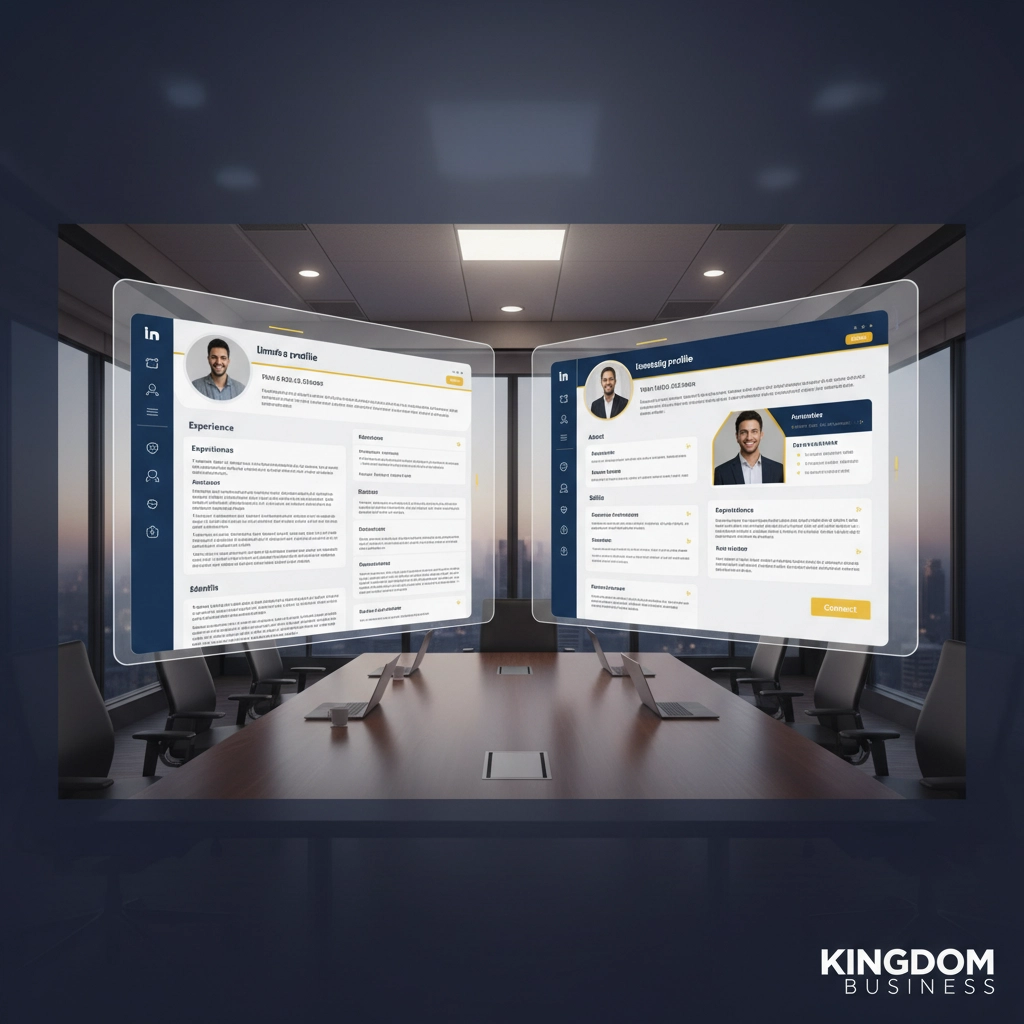
Stop Treating LinkedIn Like Your Digital Resume
Let me ask you something: when you look at your LinkedIn profile right now, does it read like a laundry list of every job you've ever had? If so, you're making the same mistake most SME owners make, treating LinkedIn as an online resume instead of a powerful positioning tool.
To stay ahead of the curve, it helps to understand Why LinkedIn Branding Will Change the Way You Land Clients in 2026.
Here's what I want you to understand: your LinkedIn profile isn't really about you at all. It's about your target audience and the specific transformation you deliver to them. This shift in thinking changes everything.
Imagine walking into a networking event and spending the entire time talking about your job history from 2005. That's essentially what most LinkedIn profiles do. Instead, picture yourself walking into that same event and immediately connecting with people by addressing their biggest challenges and showing them a clear path forward. That's the power of positioning.
Define Your Target Audience with Laser Precision
Now's the time to get brutally specific about who you're actually serving. I see too many SME owners trying to appeal to everyone, which means they connect with no one.
Start by asking yourself these game-changing questions:
What do your ideal clients actually do on LinkedIn?
Why do they use the platform?
What groups do they participate in?
What pain points are they researching on LinkedIn?
How do they describe themselves and their challenges?
Here's a reality check that might surprise you: as a successful business owner, you don't need hundreds of clients. Even one significant project every quarter could transform your revenue, or two to three smaller projects that align with your income goals. This same principle applies to LinkedIn, knowing exactly who you're targeting allows you to focus your efforts strategically rather than casting a wide, ineffective net.
Establishing this authority is a journey; for more on this, read The Faith-Driven Entrepreneur's Guide to LinkedIn Authority in 2026.
Think about it this way: would you rather have 10,000 followers who scroll past your content, or 1,000 highly engaged prospects who see you as the solution to their problems?
Craft Your Positioning Statement That Magnetizes Ideal Clients
Positioning is where many go wrong. Avoid these Are You Making These Common Branding Mistakes? to ensure you stand out as the go-to authority.
Your positioning statement is the cornerstone of everything you'll do on LinkedIn. This isn't some fluffy mission statement, it's a specific, compelling message that makes your ideal clients stop scrolling and pay attention.
Your positioning statement must accomplish three things:
Name the market you help (be specific about how they identify themselves)
Identify the exact problem you solve (the one that keeps them up at night)
Position against something they're already trying (but failing to achieve)
For example, instead of saying "I help businesses grow," try something like: "I help overwhelmed service-based business owners who are tired of being the bottleneck in their own company implement AI systems that free up 15+ hours per week so they can focus on scaling instead of scrambling."
Do you see the difference? The second statement speaks directly to a specific person with a specific problem, offering a specific solution with a measurable outcome.

Audit Your Profile Through Fresh Eyes
Before you can position yourself effectively, you need to honestly assess what potential clients see when they land on your profile. This isn't about perfectionism, it's about professionalism and clarity.
Your profile is the home of your Value-Driven Branding, showing the world your authentic online presence.
Your profile must answer these questions within 10 seconds:
What do you do?
Who do you do it for?
What results do you deliver?
Why should someone care?
Here's what needs immediate attention:
Professional Visual Branding: Your profile photo and background image should convey credibility and align with your industry. If you're in professional services, dress professionally. If you're in creative industries, show your personality while maintaining polish.
Compelling About Section: This is your elevator pitch on steroids. Don't list your credentials, tell a story that resonates with your target audience's pain points and aspirations.
Results-Focused Experience: Transform your job descriptions from duty lists into transformation stories. Show the impact you've made, not just the tasks you've completed.
Social Proof Through Recommendations: Reach out to previous clients and colleagues for recommendations that validate your expertise and character.
Build Your Strategic Foundation Before Anyone Else Touches It
Integrate your LinkedIn presence into a cohesive Social Media Strategy to maintain brand consistency.
With over 900 million users on LinkedIn, standing out requires more than generic posts and hope. You need a foundation built on clarity, not confusion.
Picture this scenario: you invest in LinkedIn consulting without doing this foundational work first. The consultant creates a beautiful strategy, but it's built on shifting sand because you haven't clarified your positioning. Three months later, you're still not attracting your ideal clients, and you're wondering why the investment didn't pay off.
Now imagine this alternative: you complete the foundational work I'm outlining. You know exactly who you serve, how you serve them, and what transformation you deliver. When you do invest in consulting, the consultant can amplify a clear, compelling message rather than trying to figure out what you do while you're paying their hourly rate.

The LinkedIn Positioning Framework That Changes Everything
Here's the framework I want you to implement before you even think about hiring help:
Step 1: Audience Research Deep Dive
Spend a week studying your ideal clients on LinkedIn. What content do they engage with? What language do they use? What challenges do they openly discuss? Take notes: this intelligence is worth its weight in gold.
Step 2: Competitive Intelligence
Look at others serving your market. What positioning do they use? What gaps do you notice? How can you differentiate your approach? This isn't about copying: it's about finding your unique angle.
Step 3: Message Testing
Start conversations with your existing network. Share your positioning statement and ask for feedback. Does it resonate? Does it clearly communicate what you do? Refine based on real responses from real people.
Step 4: Content Theme Development
Align these themes with your broader Kingdom Content Strategy for maximum impact.
Based on your research, identify 5-7 content themes that serve your audience while showcasing your expertise. These themes become your content calendar foundation.
Why This Foundation Work Is Non-Negotiable
Let me share something that might save you thousands: LinkedIn marketing takes time. Unlike outbound sales tactics that force a quick yes or no, LinkedIn success requires patience and consistency. You don't want to be just another person trying to sell something: users receive countless pitches daily.
Making your interactions personal and memorable requires authenticity that only comes from truly understanding your own positioning and your audience's needs. No consultant can manufacture that authenticity for you.
Before jumping into major expansions or exports, it's vital to see how you can apply a Kingdom Business Response to programs like the Queensland Market Accelerator.
Ultimately, this is about Branding with Purpose, ensuring your LinkedIn presence reflects your Kingdom values of integrity and impact.
When you complete this foundational work yourself, you'll approach any consulting engagement with clarity about your positioning, your audience, and your goals. You'll be able to evaluate whether a consultant truly understands your business and can articulate how they'll enhance what you've already built.
Your Next Steps Start Right Now
Decide whether Virtual Assistants Vs DIY Business Tasks are the right leverage for your SME's growth.
Now's the time to take action. Don't let another month pass with a LinkedIn profile that doesn't serve your business goals.
Start with defining your target audience this week. Be ruthlessly specific. Then craft your positioning statement and test it with people in your network. Audit your profile through the lens of your ideal client: what would they think when they land on your page?
Remember, this foundational work isn't just preparation for hiring a consultant: it's preparation for LinkedIn success, period. Whether you ultimately work with a consultant or handle your LinkedIn strategy yourself, this clarity will transform your results.
The reality is simple: you can't outsource understanding your own value or knowing your audience. But once you have that foundation solid, imagine the possibilities. Picture yourself confidently networking online, attracting ideal clients, and building the authority your expertise deserves.
Your LinkedIn transformation starts with you, and it starts today.
Ready to take your LinkedIn presence to the next level with proven systems and templates? Discover how successful SME owners are leveraging AI and automation to build powerful personal brands that attract ideal clients consistently.
If you’re ready to move from a "digital resume" to a high-impact authority brand, visit Kingdom Business Australia to discover how we help SMEs scale with purpose and precision.
